
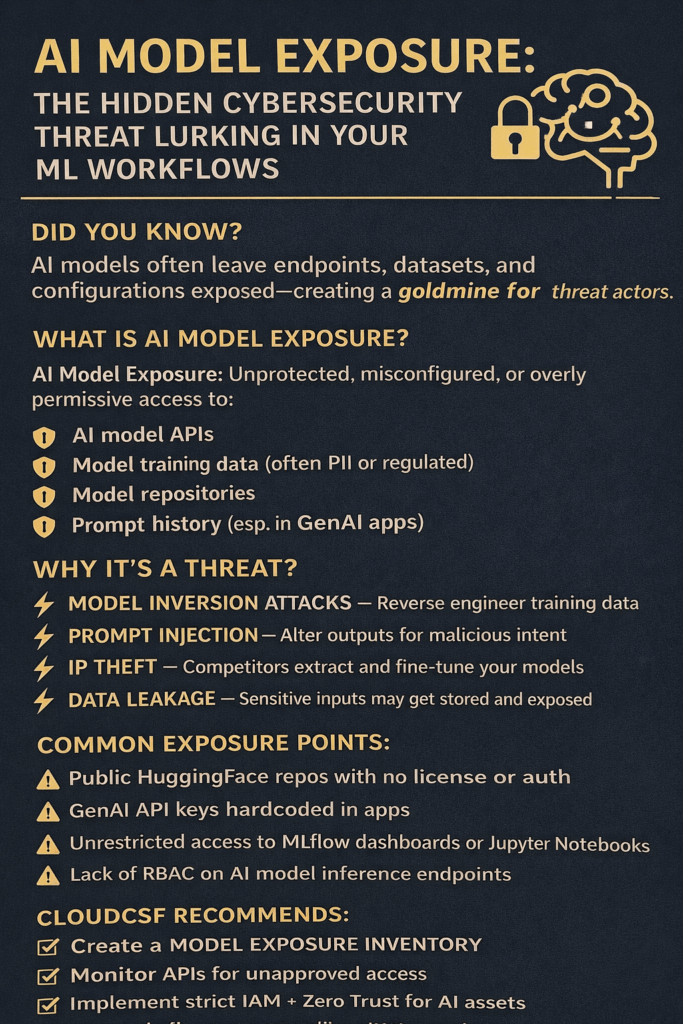
🔐 Day 37 – AI Model Exposure: The Hidden Cybersecurity Threat Lurking in Your ML Workflows
🎯 Did You Know?
Organizations deploying AI models often leave model endpoints, datasets, and configurations exposed — creating a goldmine for threat actors.
🧠 What Is AI Model Exposure?
AI Model Exposure refers to unprotected, misconfigured, or overly permissive access to:
- AI model APIs
- Model training data (often PII or regulated)
- Model repositories
- Prompt history (esp. in GenAI apps)
💥 Why It’s a Threat?
- Model Inversion Attacks – Reverse engineer training data.
- Prompt Injection – Alter outputs for malicious intent.
- IP Theft – Competitors extract and fine-tune your models.
- Data Leakage – Sensitive inputs may get stored and exposed.
📉 Common Exposure Points:
- Public HuggingFace repos with no license or auth
- GenAI API keys hardcoded in apps
- Unrestricted access to MLflow dashboards or Jupyter Notebooks
- Lack of RBAC on AI model inference endpoints
📈 CloudCSF Recommends:
✅ Create a Model Exposure Inventory
✅ Monitor APIs for unapproved access
✅ Implement strict IAM + Zero Trust for AI assets
✅ Run periodic exposure audits with internal + external testers
📥 FREE Download (Excel + PDF):
🗂️ [AI Model Exposure Tracker – Excel + PDF Templates]
Track, Audit & Prioritize Fixes Before Attackers Exploit Them.
🔁 Share this with your #DataScience and #AI security team.
Let’s build Trustworthy AI by Design.
AI cybersecurity, model exposure risk, GenAI security, prompt injection, AI API security, AI threat prevention, model inversion attacks, AI governance, machine learning security, AI model risk audit, AI risk register, AI compliance, MLflow security, Jupyter security, HuggingFace exposure, AI data protection, Zero Trust AI, IAM for AI, CloudCSF, AI asset security