
✅ CloudCSF Day 32 – Privilege Drift: The Silent Killer of Least Privilege
🎯 Post Title:
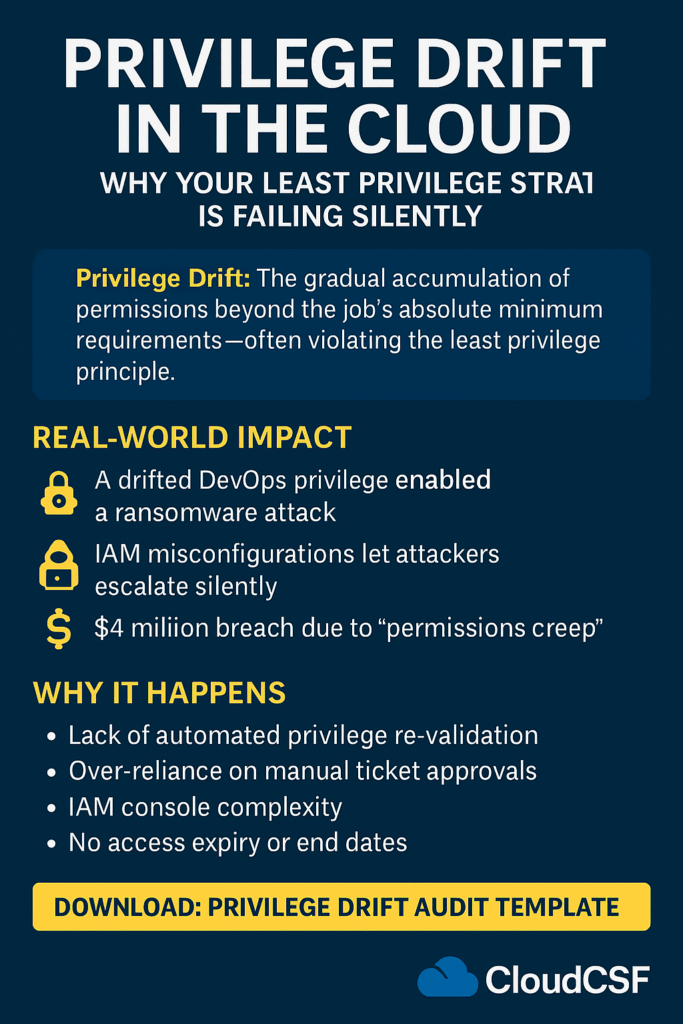
“Privilege Drift in the Cloud – Why Your Least Privilege Strategy is Failing Silently”
🔥 What Is Privilege Drift?
Privilege Drift happens when user or service roles slowly accumulate more permissions than originally intended—violating least privilege principles without triggering alerts.
Example:
- A DevOps engineer gets temporary production access for 2 days.
- 6 months later… still has full access.
- No one noticed. 🔥
🚨 Real-World Impact
- 💣 A drifted privilege led to a ransomware attack via an unused backup tool.
- 🕵️♂️ IAM misconfigurations enabled attackers to escalate access undetected.
- 📉 $4M breach traced to “accidental permissions”.
🧩 Why It Happens:
- Lack of automated privilege revalidation.
- Over-reliance on manual ticket approvals.
- IAM console complexity hides drift.
- No time-bound roles or access expiration.
🛡️ CloudCSF’s Privilege Drift Audit Template Covers:
✅ Users with >3 roles across multiple services
✅ Permissions added post-onboarding
✅ Orphaned admin roles
✅ Unused access paths >30 days
✅ Cross-account access without justification
✅ IAM role chaining indicators
📥 Download:
🔗 [CloudCSF Privilege Drift Audit Template – XLSX & PDF]
Audit your permissions today before attackers do tomorrow.
🔁 Share this post with:
CISOs, Cloud Architects, IAM Leads, and DevSecOps Pros who believe in Security by Design and Zero Standing Access.
🧠 #CloudCSF Tip of the Day:
“Standing access is standing risk. Automate expiry, validate usage, and never assume ‘Read-Only’ is harmless.”
Hashtags:
#PrivilegeDrift #LeastPrivilege #IAMAudit #CloudSecurity #CloudCSF #ZeroTrust #IdentityGovernance #CyberRisk #DevSecOps #SecurityByDesign