
🎯 Goal: Help organizations uncover and fix public exposure risks using open-source intelligence (OSINT) and cloud misconfiguration testing.
🌐 CloudCSF Day 10
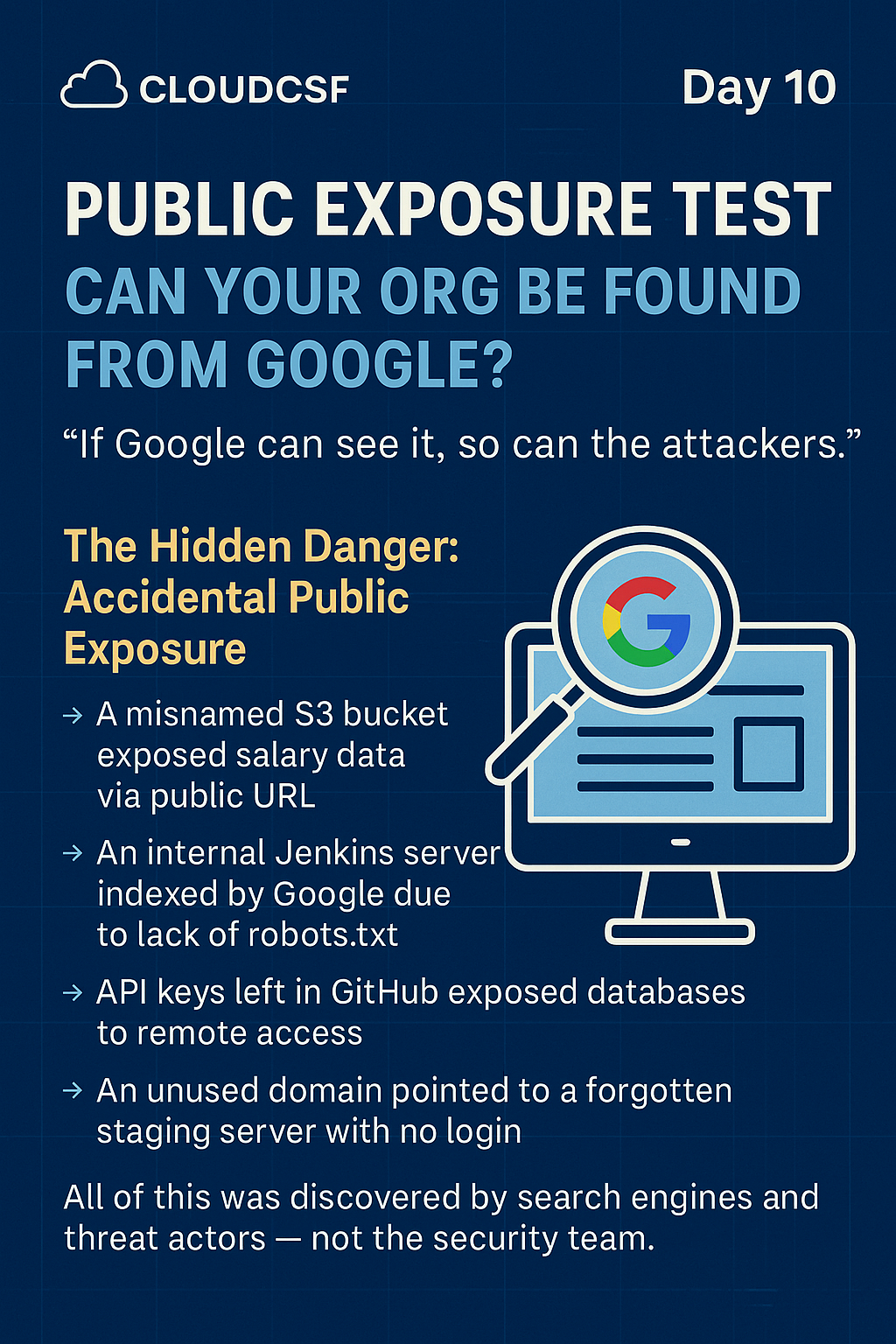
Control #9: Public Exposure Test – Can Your Org Be Found from Google?
“If Google can see it, so can the attackers.”
💣 The Hidden Danger: Accidental Public Exposure
You’d be shocked how often companies leak themselves.
Examples from real breaches:
- A misnamed S3 bucket exposed salary data via public URL
- An internal Jenkins server indexed by Google due to lack of robots.txt
- API keys left in GitHub exposed databases to remote access
- An unused domain pointed to a forgotten staging server with no login
All of this was discovered by search engines and threat actors — not the security team.
🔍 What Is a Public Exposure Test?
A public exposure test is a controlled reconnaissance check using public tools and search engines to identify:
- Public-facing assets you didn’t mean to expose
- Metadata leaks (file names, folder structures)
- Misconfigured storage, servers, and dashboards
- Staging or backup environments left live
- Indexing of sensitive files (e.g.,
/admin,/config,/logs/)
✅ 5-Step Exposure Test – CloudCSF Style
- Start with Google Dorks
- Examples:
site:yourdomain.com inurl:adminsite:s3.amazonaws.com filetype:xlsintitle:index.of "backup"site:github.com yourcompany token
- Examples:
- Check Cloud Asset Indexes
- S3 browser, Azure blob storage URLs, GCP buckets
- GreyhatWarfare.com, LeakIX, Censys.io
- Scan Your Subdomains
- Use tools:
amass,Sublist3r,crt.sh,SecurityTrails - Look for forgotten staging, old APIs, legacy login portals
- Use tools:
- Look for Open Directories or Unprotected Dashboards
Shodan,ZoomEye,Onyphe- Check for Jenkins, Kibana, Grafana, etc.
- Build a Fix-First Report
- List exposed assets, owners, and risk levels
- Assign closure timelines (0–3 days, 3–7 days, etc.)
📊 Exposure Maturity Levels
| Level | Description |
|---|---|
| 🚫 0 – Unscanned | No visibility of public exposure |
| ⚠️ 1 – Occasional Search | Only react to external reports |
| 🔁 2 – Periodic Self-Dorks | Internal security runs tests sometimes |
| 🔐 3 – Weekly OSINT Audits | Scheduled, scored, and reviewed |
| 🛡️ 4 – Continuous Attack Surface Monitoring | Automated tools + red team feedback loop |
🛠️ Tools You Can Use
- ✅ Google Dorks, GitHub Advanced Search
- ✅ Shodan, Censys, LeakIX, GrayhatWarfare
- ✅ Subdomain scanners: amass, Subfinder, Assetnote
- ✅ CSPM tools: Wiz, Lacework, Prisma Cloud, Datadog ASM
💡 CloudCSF Pro Tip
“Your cloud security isn’t just what you know — it’s what the internet knows about you.”
🎁 Free Resource
👉 [Download: OSINT Exposure Testing Checklist (PDF)]
👉 Join the CloudCSF WhatsApp Group for daily audit methods
💬 Comment :
Have you ever googled your org and found something unexpected?
Comment “PublicScan 🌐” and get our Exposure Checklist instantly.
🔁 Coming Tomorrow:
Day 11: Control #10 – API Security: Testing Auth, Rate Limits & Logging
Learn how to find and fix API security gaps before attackers do.